Location: Woodland Community Garden, Glasgow
Timeline: Ongoing series (established 2014)
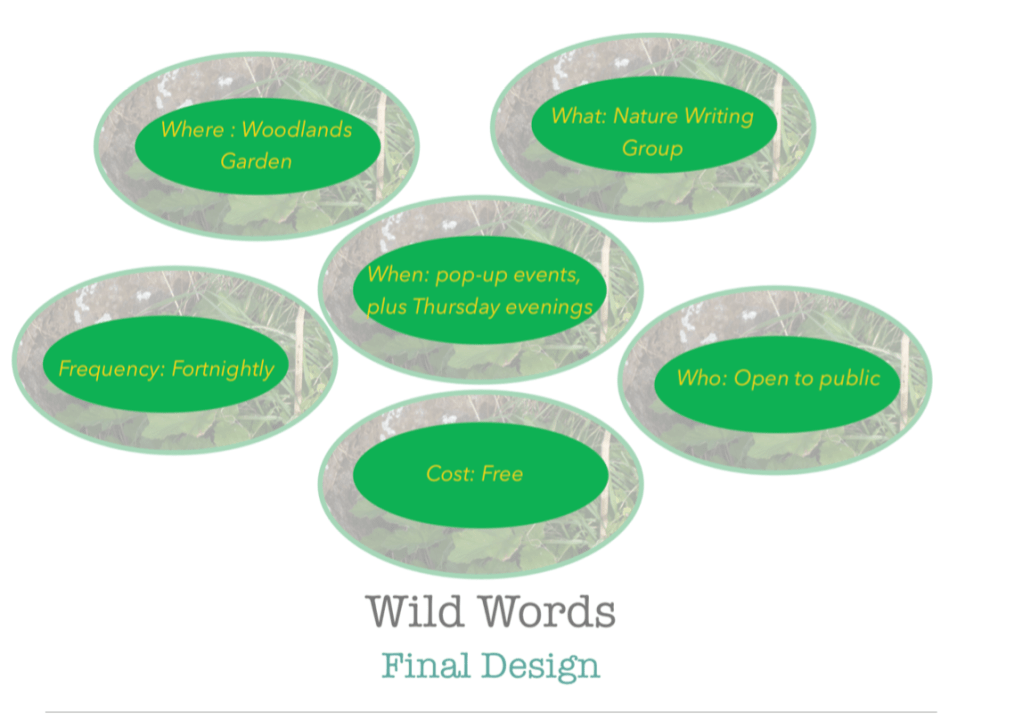
Format: Fortnightly creative writing sessions
The Challenge
Design a creative writing group that would integrate with Woodland Community Garden’s existing activities, support the vision of making the garden “a small hub of sustained creativity,” and be sustainable to run long-term with minimal resources and facilitation.
Design Approach
Rather than creating a standalone writing group, we designed Wild Words to weave into the garden’s rhythms and existing community. The approach emphasised:
- Small and slow start: testing and learning rather than launching with big expectations
- Built-in pauses for reflection (both within sessions and in reviewing what worked)
- Integration with garden events and seasonal cycles
- Nature and place as the primary creative prompt
- Accessible structure that didn’t require extensive preparation each time
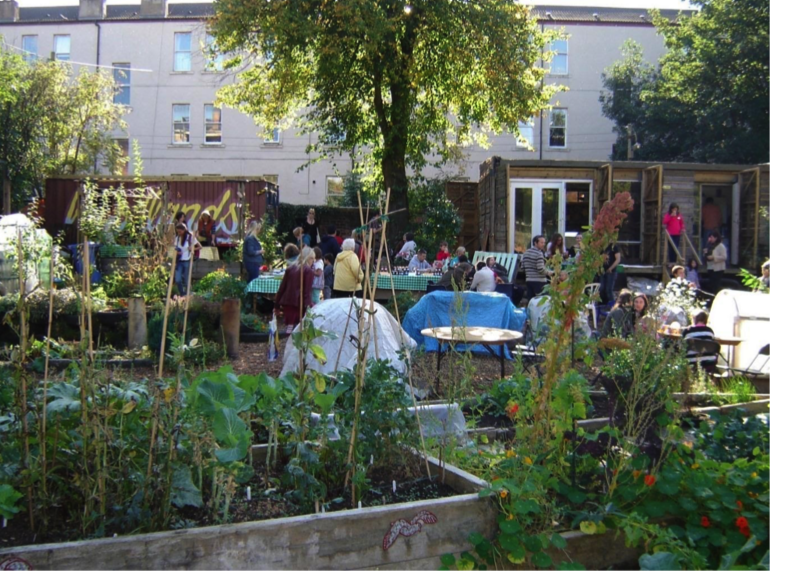
The design used seasonal observation and the garden itself as inspiration. Participants might spend time noticing light through winter branches, the texture of bark, the sound of wind in leaves, then respond through writing. The garden became both subject and container, doing much of the creative work for us.
What We Did
- Established fortnightly pattern with consistent but flexible structure: gather, prompt, write, pause, share
- Created sessions around seasonal themes and direct nature observation
- Used simple prompts that worked outdoors in any weather: “Write what you hear,” “Follow one colour,” “What’s at the edges?”
- Linked sessions to garden’s calendar: harvest celebrations, seasonal festivals, workdays
- Kept it low-barrier: bring a notebook, dress for weather, come when you can
What Actually Happened
The group found its rhythm quickly. Regular attendees developed their own relationships with the space: favourite sitting spots, particular trees they returned to, seasonal observations that spanned years. New people would arrive hesitant (“I’m not a writer”) and leave with pages filled, surprised by what emerged when they stopped trying so hard.
The outdoor setting changed everything. Writing outside meant weather became part of the experience. Huddling under tarps in rain, sprawling on grass in sun, noticing frost patterns whilst fingers went numb. The discomfort and immediacy kept writing honest and present.
Sessions became known as restorative pauses in busy lives. People came for the permission to slow down as much as the writing itself.
Outcomes
- Sustained regular attendance over multiple years with core group and rotating newcomers
- Created “hub of creativity” as envisioned, attracting gardeners, non-gardeners, writers, and non-writers
- Demonstrated how creative practice deepens connection to community green spaces
- Developed replicable model used by other gardens and outdoor learning spaces
- Low facilitation burden (simple prompts, minimal materials) made it sustainable long-term
- Participants described sessions as “essential,” “grounding,” “the best two hours of my fortnight”
What Made It Work
We designed for reality: volunteer-run, weather-dependent, competing with busy lives. By accepting modest beginnings and building in flexibility, the group could adapt and persist. Integration with existing garden activity meant we weren’t building something new from scratch but enriching what was already there.
Most importantly, we trusted the garden to do the heavy lifting. The beauty, the seasonal changes, the robin that showed up every session became the real teachers. Our job was simply to create the structure for people to notice and respond.
 Priya Logan