Permaculture Approaches to Birth Work
Timeline: 2014-2020
Format: Applied design exploration + public engagement
Focus: Bridging permaculture ethics with care work
The Challenge
Explore how permaculture thinking could inform doula practice, address systemic inequalities in birth support, and make the role of doulas more visible and understood by the public. Birth work is often isolating, undervalued, and inaccessible to many families who would benefit most.
Design Approach
Rather than treating permaculture and care work as separate domains, this design examined how permaculture’s three ethics (People Care, Earth Care, Fair Share) naturally align with doula practice. The approach emphasised:
- Observation and responsive presence over intervention
- Small, slow approaches to building trust with families
- Designing for diversity: recognising every birth and family is unique
- Fair share: making doula support accessible, not just for those who can easily afford it
- Pattern recognition: understanding birth rhythms, family structures, cultural practices
The work manifested in two ways: a public art project making doulas visible, and written reflection connecting permaculture principles to birth support.
What We Did
Public Art Project (Doula Week 2014)
- Created interactive installation at Project Cafe, Glasgow
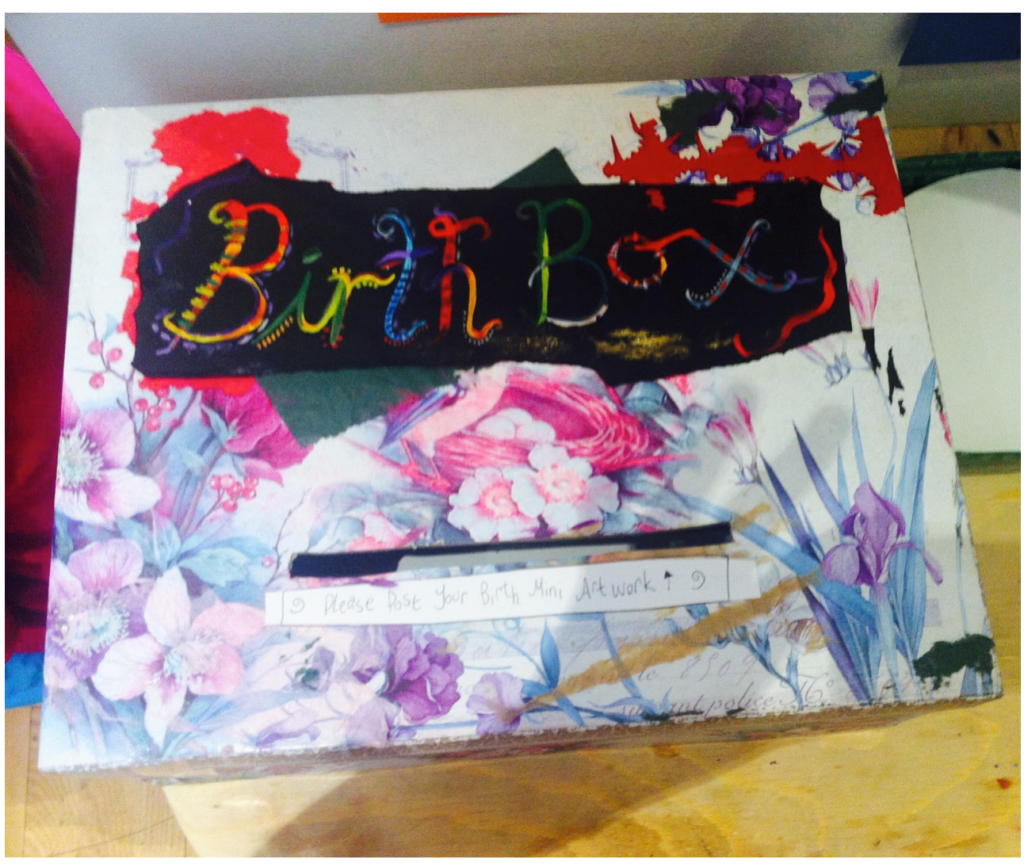
- Invited public to draw or stitch images representing birth
- Displayed contributions in large dreamcatcher (symbolising receptivity, catching hopes and concerns)
- Hung from ceiling with red wool (umbilical cord), bells, and hawk feathers
- Included information displays about doula work
Written Work
- Explored connections between David Holmgren’s 12 permaculture principles and doula practice
- Published article “Doulas and Permaculture” in Permaculture Women (2018, updated 2020)
- Examined how principles like “Observe and Interact,” “Use and Value Diversity,” and “Slow and Small Solutions” apply directly to birth support
What Actually Happened
The dreamcatcher installation surprised people. Thirty-five contributions came in, from intricate drawings to simple stitched symbols. The diversity of responses reflected exactly what the project aimed to show: birth is universal but intensely personal, and everyone has something to say about it.
The installation stayed up for three weeks. Cafe staff reported customers stopping mid-conversation to look up at it, then talking about their own birth experiences. Several people asked what a doula was, which was precisely the point. Birth issues aren’t marginal, they affect everyone, but we treat them as private or medical rather than communal and human.
The written work found its audience more slowly. After initial submission to Permaculture Magazine (positive feedback but challenging to place non-land-based designs), it eventually found a home with Permaculture Women, where it’s been shared repeatedly and reached an estimated 200 readers interested in social permaculture and care work.
Outcomes
- Made doula work visible to broader public beyond expectant families
- Demonstrated permaculture applies beyond gardens to care systems and human transitions
- Created accessible entry point for discussing birth and support needs
- Published work connecting permaculture ethics to care work, filling gap in permaculture literature
- Explored how observation, pattern recognition, and responsive design apply to supporting families
- Contributed to growing field of social permaculture and people-care design
What Made It Work
The strength was in making abstract connections tangible. Permaculture can sound theoretical when applied to care work, but specific principles like “the person is the textbook” (adapted from “the landscape is the textbook”) or “slow and small solutions” immediately make sense to anyone supporting families through major transitions.
The public art component worked because it was participatory. Rather than telling people what doulas do, it invited them into conversation about birth, which naturally led to understanding why continuous, compassionate support matters.
Most importantly, this design examined how care work itself is a regenerative practice. When families are well-supported through birth and early parenting, the effects ripple outward: stronger bonds, reduced trauma, more capacity for community engagement. Fair share isn’t just about access to resources, it’s about recognising that caring for people through vulnerable transitions is foundational work, not optional luxury.


 Priya Logan